
August 10, 2026
Why Portland Homeowners Get Hit With Change Orders, and How to Eliminate the Risk Before Demo Day
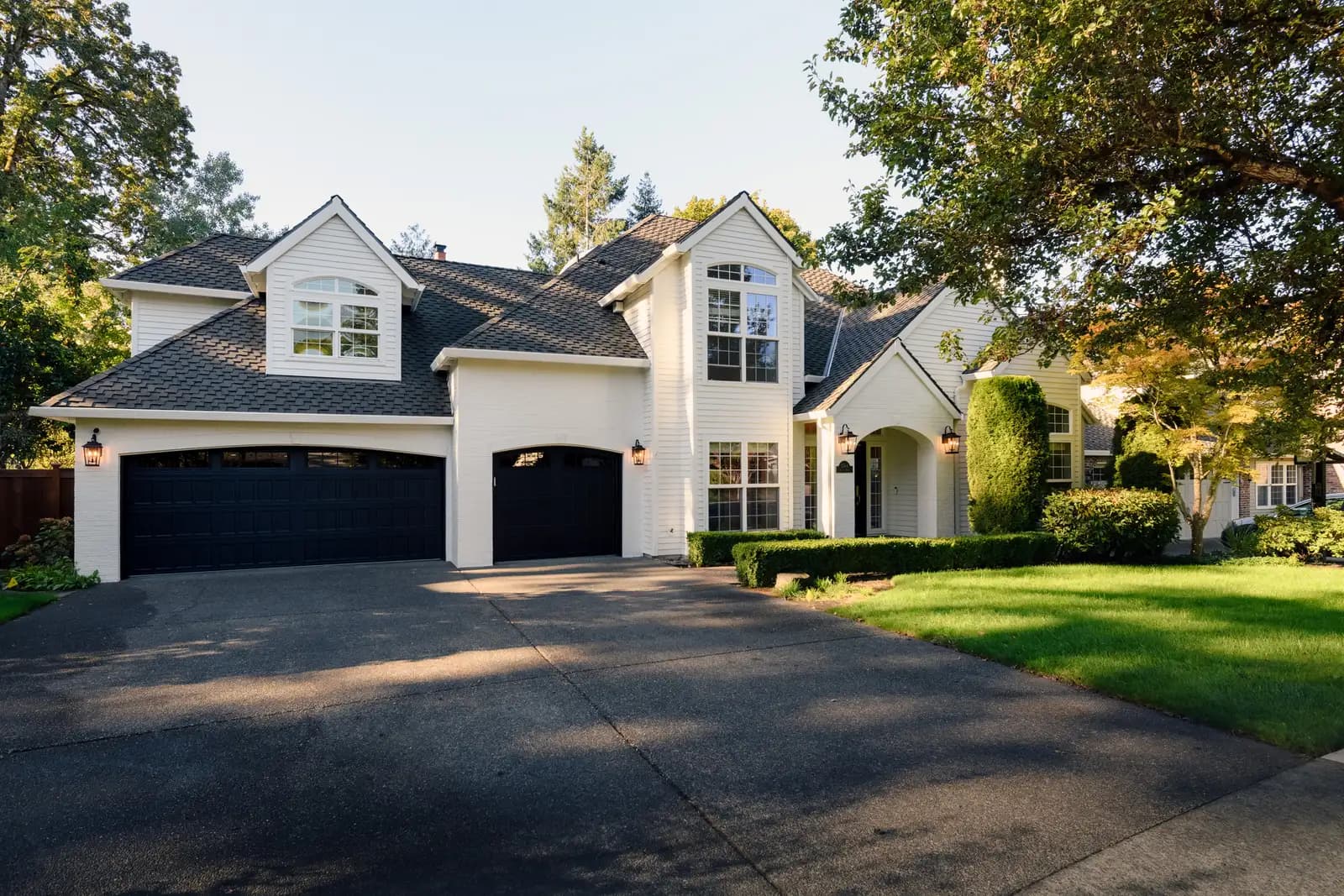
We spoke to a homeowner who told us that once their remodel was already underway, they discovered the duct behind a wall wasn’t really duct work at all. Somewhere along the way, someone had framed a plain drywall chase around empty space and called it done. There was no way to know air wasn’t actually moving through it until the wall came open. That’s a legitimate discovery, and a real change order, the kind no walkthrough could have caught.
Most change orders aren’t that kind of surprise. They’re the predictable result of a bid that was never fully priced to begin with, and by the time you find out, you’re too far in to walk away.
This post breaks down what a change order actually is, why most of them are avoidable, and how Tortoise Construction structures pre-construction planning so real unknowns get disclosed upfront, not billed after demo day.
What Is a Change Order, Really?
A change order is any modification to the original scope after a contract is signed. In practice, it’s a bill that shows up mid-project for work your contractor says wasn’t in the original plan.
They come from two directions.
Homeowner-initiated: you change your mind mid-project. Maybe it’s different tile, or a wall you decide to move once you see the space opened up. Every one of these carries a real cost, and with labor and materials already mobilized, that cost runs steep.
Contractor-initiated is the one that stings. Something “unexpected” turns up: a rotted beam, wiring that isn’t up to code, a duct run that turns out to be nothing more than an open drywall chase. Some of that really is unforeseeable. Most of it isn’t. It’s the cost of a contractor who didn’t do the digging before handing you a number.
Mike Jeske, Tortoise Construction’s owner, uses one test to sort real change orders from avoidable ones: was it done properly the first time? If a wall opens up and something inside genuinely wasn’t done to code, or an old system turns out different than anyone could have assumed, that’s a legitimate discovery. If the origin is a contractor who didn’t lock down subcontractor pricing tightly enough before bidding, that’s a bad bid, and you’re the one paying for it.
The Numbers Don’t Lie: Why Remodeling Goes Wrong
The data on remodeling is bleak. According to Houzz 2026:
- 62% of remodels exceed or lack a defined budget
- 75–98% of remodeling projects face significant delays
- 74% of homeowners report renovation regrets after their project
- Only 25% of projects finish on schedule
- Only 38% stay on budget
Mike’s own review of change orders across the industry lines up with that: most run 10–20% over the original number, so a $100,000 kitchen creeps to $110,000–$120,000. The outliers are worse. He’s seen change orders eat up to 50% of a project’s total cost, and it’s almost always tied to the same root cause: cost-plus contracts.
Watch Out for Cost-Plus Contracts
Cost-plus contracts bill a markup on top of whatever time and materials actually get used, so there’s no real ceiling protecting the homeowner. Mike Jeske puts it plainly: “I can almost guarantee it’s going to cost you a minimum of 15 to 20%, up to even 50%, over what you budget.”
If a contractor asks you to sign a cost-plus contract, that’s the moment to ask what’s excluded from the bid, not after the walls are open. A fixed-price bid is a promise the contractor has to stand behind. A cost-plus contract is a promise that you’ll cover whatever it ends up costing, plus their margin, whatever that number turns out to be.
How a Real Pre-Construction Inspection Finds the Unknowns
Before you get a number, the crew does digging most companies skip. A plumber runs a camera down the drain lines. An electrician checks the panel’s actual load, not just its label. Someone gets into the attic and crawlspace. A few small inspection holes go into siding or sheetrock at key spots.
We spoke to a homeowner who told us that once their contractor opened up the space for a planned garage bathroom, they learned an electrical panel was sitting exactly where the new layout needed to go. The whole plan had to shift before a single wall came down. That’s exactly the kind of thing a real pre-construction inspection exists to catch early instead of mid-demo.
Most homes don’t have accurate as-built drawings, and this process doesn’t assume otherwise. The crew uses LIDAR scanning to build real as-builts from scratch before finalizing a layout, instead of designing around twenty-year-old blueprints that may not match what’s actually behind the walls.
None of this eliminates every unknown. What it does is turn “we’ll bill you if we find something” into “here’s what we’re holding in reserve, and here’s why.”
Reserve Funds, Not a Change Order
When something can’t be fully ruled out ahead of time, that risk doesn’t disappear into a padded bid, and it doesn’t show up later as a surprise. Instead, a reserve gets set aside: a specific dollar amount held back before construction starts, to cover a short list of named contingencies, the particular things that could turn up once the walls open.
“We don’t know how many sheets of plywood are going to be rotten down there,” Mike says, “but I can tell people ahead of time, with a level of experience, what to hold out for.” That’s the idea behind a reserve: an amount set aside before demo day for a defined list of possibilities, not billed as a surprise after the fact.
The contingencies themselves are specific, not vague. Old knob-and-tube wiring spliced into newer-looking Romex is a common one, since it stays invisible until the walls come open. So is brittle CPVC plumbing from an older build, or a section of roof sheeting that’s rotted out underneath shingles that still look fine from the ground. An experienced contractor can flag these as real possibilities before demo day and size the reserve around them, instead of waiting to bill for them later.
The difference matters more than it sounds. A change order is a bill you didn’t see coming. Reserve funds are a dollar amount you agreed to before demo day, covering specific, named contingencies. If none of them turn out to be real, you don’t pay it.

The 5-Step Pre-Construction Process
This is called the Pre-Construction Process. Five steps, each one narrowing the budget range until there’s no room left for surprises.
Step 1: Measure Meeting (Budget Certainty: ±40–60%)
The process starts before any firm number is discussed. We walk the site, review the plans, and assess existing conditions. You get an honest range, not a tight quote, because at this stage we haven’t done the work to earn one.
Step 2: Scope & Layout Meetings (±25–40%)
We work through design decisions together: what moves, what stays, what the project actually includes. Every layout decision reduces uncertainty a little more.
Step 3: Selections (±15–25%)
Every finish gets chosen before construction begins: tile, hardware, fixtures, appliances. This is the step homeowners are tempted to shortcut when a number runs a little high, and it rarely ends well. We spoke to a homeowner who told us that on their remodel, they’d backed off the countertop they actually wanted late in the process to save the last $10,000. The job finished on budget. They never stopped wishing they’d chosen differently. Locking every finish before a wall opens is what keeps a budget trim from turning into years of quiet regret.
Step 4: Trades Day Confirmation (±5–10%)
Every subcontractor, plumber, electrician, HVAC, framing crew, provides a confirmed price before demo day. Not a range. A locked number.
Step 5: Final Review and Approval (Fixed Price)
Every detail gets documented and every number gets locked. You’re the one who signs off on the final scope and schedule before anything begins. When you approve it, that’s the number, not a starting point.
The No Change Order Guarantee: What It Actually Means
Most builders focus on construction. Tortoise focuses on construction and risk management.
The No Change Order Guarantee is a promise: if the pre-construction process is done right, and any real unknowns are disclosed as reserve funds against named contingencies instead of hidden in the bid, you won’t face a surprise bill mid-project. The planning is the product.
It also protects something most contractors never mention: your equity. Every decision gets evaluated not just for what it costs to build, but for what it does to your home’s long-term value. A $50,000 project that erodes equity isn’t the same as one that builds it. We protect your equity, not just your square footage.
The starting point is a free Project Risk Snapshot™, a 30-minute consultation to identify the biggest risks to your budget and timeline before you commit to anything. You leave knowing the numbers before demo begins.
Frequently Asked Questions About Remodeling Change Orders
What is the average percentage of change orders in construction?
Industry benchmarks put it around 5–15% of a project’s total cost on residential remodels. Mike Jeske’s own review of change orders across the industry puts the common range closer to 10–20%, with cost-plus contracts pushing that as high as 50% in the worst cases.
What’s the difference between a change order and reserve funds?
A change order is a bill for something that wasn’t disclosed upfront. Reserve funds are a specific dollar amount set aside before construction starts to cover a short list of named contingencies, things like rotted roof sheeting or old wiring that a thorough pre-construction inspection flagged as possible. You only pay if one of those contingencies turns out to be real.
Can a contractor do work without a change order?
A contractor isn’t entitled to additional compensation for work outside the original scope unless both parties sign a change order establishing the cost and timeline. Get scope changes documented in writing before the work happens, not after the invoice arrives.
What are the most common causes of change orders in remodeling?
Incomplete scope definitions, subcontractor prices that were estimated instead of confirmed, finish selections made mid-project instead of upfront, and undiscovered site conditions that a thorough pre-construction inspection would have caught.
What is the 30% rule in remodeling?
The informal “30% rule” tells homeowners to budget at least 30% more than their initial quote to cover change orders and overruns. It exists because contractors routinely underbid. Working with a contractor who discloses real unknowns upfront, instead of billing for them later, makes that buffer unnecessary.
The Bottom Line About Change Orders
Change orders aren’t inevitable. Most of them are the predictable result of a bid that wasn’t priced thoroughly enough before work started, or a cost-plus contract with no real ceiling.
Portland homeowners deserve a contractor who finds the real unknowns before demo day and tells you about them, instead of one who passes the risk to you through a series of mid-project bills.
Ready to find out the real risks to your remodel budget before you commit? Schedule your free Project Risk Snapshot™ with Tortoise Construction. Thirty minutes. Real numbers. No surprises.